[Image:81903_22607_2.png]Book resources for a presentation Minimum version: FirstClass 8.3 Audience: Business professionals Experience: [Image:9203_22631_1.png] FirstClass applications used: [Image:9203_24337_3.png][ fcp://@fc.onlinehelp.com,%237600229/En/OnlineHelp/Client Help/Calendars ]Calendars [Image:9203_31709_1.png] Summary Looking for a simple way to organize the location and resources you need for your presentation? Consider using a FirstClass calendar. Instead of sending out printed memos and filling out request forms, you can use a group calendar in FirstClass to invite participants, reserve multimedia resources, and book locations. Here is a comparison of the conventional way you may book resources and how you would do it in FirstClass. [Image:92203_31828_0.png] [Image:9203_31709_1.png] Example Michael Green is vice president of Sales and Marketing at Husky Planes. Several times a year he showcases the company's newest products for his sales staff. His presentations usually consist of a promotional videotape from the Marketing department accompanied by a slide presentation. Michael schedules the presentation, invites members of the sales department, and books the boardroom and multimedia resources all at the same time. He doesn't have to leave his office to ensure that his presentation goes off without a hitch. Here are the steps he takes to handle the arrangements: STEP 1: Schedule presentation Michael schedules the presentation in the Sales Dept Calendar by creating a new event entitled New Product Promo. This is the new event he created. [Image:8102006_91145_0.png] STEP 2: Reserve venue Each resource or location Michael wishes to book has its own calendar. When he schedules an event, he simply enters the name of the resource calendar or location calendar on the Scheduling tab of the event he is booking. If there is a time conflict, it will show immediately and he can decide how to handle it. Michael reserves the company's mid-sized boardroom using the Scheduling tab. STEP 3: Reserve resources Michael also reserves a large screen television, a video cassette recorder, and a video projector. This is the Scheduling tab where he books the resources. [Image:882006_33623_2.png] When he entered his requests on the Resources tab for the New Products Promo event, a new event appeared in each item's calendar. Husky Planes' IT department monitors the resource and location calendars and ensures that requested equipment is ready for use when scheduled. This is the calendar for the video projector that John booked. [Image:882006_32721_0.png] STEP 4: Invite participants Michael invites the members of the sales department by entering their names on the Scheduling tab. From this screen, he sees who may have a time conflict. He adjusts the date and time as needed (the booked times for the resources and locations will also change automatically). The presentation will then appear in each of their personal calendars. This is the Scheduling tab where he invites participants. [Image:882006_33910_4.png] [Image:9203_31709_1.png] Variation If Michael has content he wishes to share before the presentation, he can attach it to the calendar event at the time of scheduling or type it in the text box on the event form. This is the event he created. He attached a file for review and included an agenda in the text area. [Image:882006_32224_4.png]
   
F4016
 
 
Home  •  Help  •  M0  •  Practical Uses for FirstClass  •  Project Management - Business  •  Project Stages  •  F4016
72203_112759_0.pngCollecting information
Stages
 Gathering and storing information traditionally
In a traditional setting, team members may gather information by studying reports, surfing the Internet, holding brainstorming sessions, and conducting meetings and interviews. The collected information may have been compiled and stored in a binder or word processing document until needed. The problem with this method of gathering information is that one person would be responsible for keeping it safe, and it may be difficult for others to review it. Another potential problem is that team members might each be responsible for their own sections, but if somebody is unavailable when the project is being compiled, this can set the group back.
FirstClass can solve these issues by centralizing the location of all the information. Information is stored within the project conference, so all of the team members have access to it.
9203_31808_2.png FirstClass is an information organizer
FirstClass is an excellent means of storing information, regardless of where or how it was collected. Members can post all of their information in one location as it is gathered using a series of FirstClass documents. As they gather the information, they can:
•       paste information from the Internet into a document or message
•       subscribe the conference to a newsgroup so it is automatically populated
•       type information into a document or message from materials gathered from books, interviews, or other sources
•       photocopy material and fax it to a Mailbox, then drag it into the conference
•       call into a Mailbox and leave a voice message containing information, then drag the message into the conference.
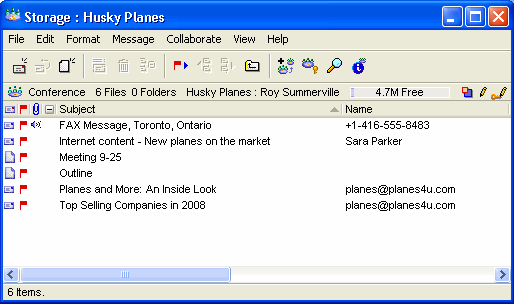
This conference shows the various types of input that can be collected.
112006_23540_0.png
9203_31808_2.png The next step
Depending upon the requirements of the project, team members may need to produce an end result, such as a proposal, business plan, white paper, and/or a presentation. FirstClass can help with all of these components.